
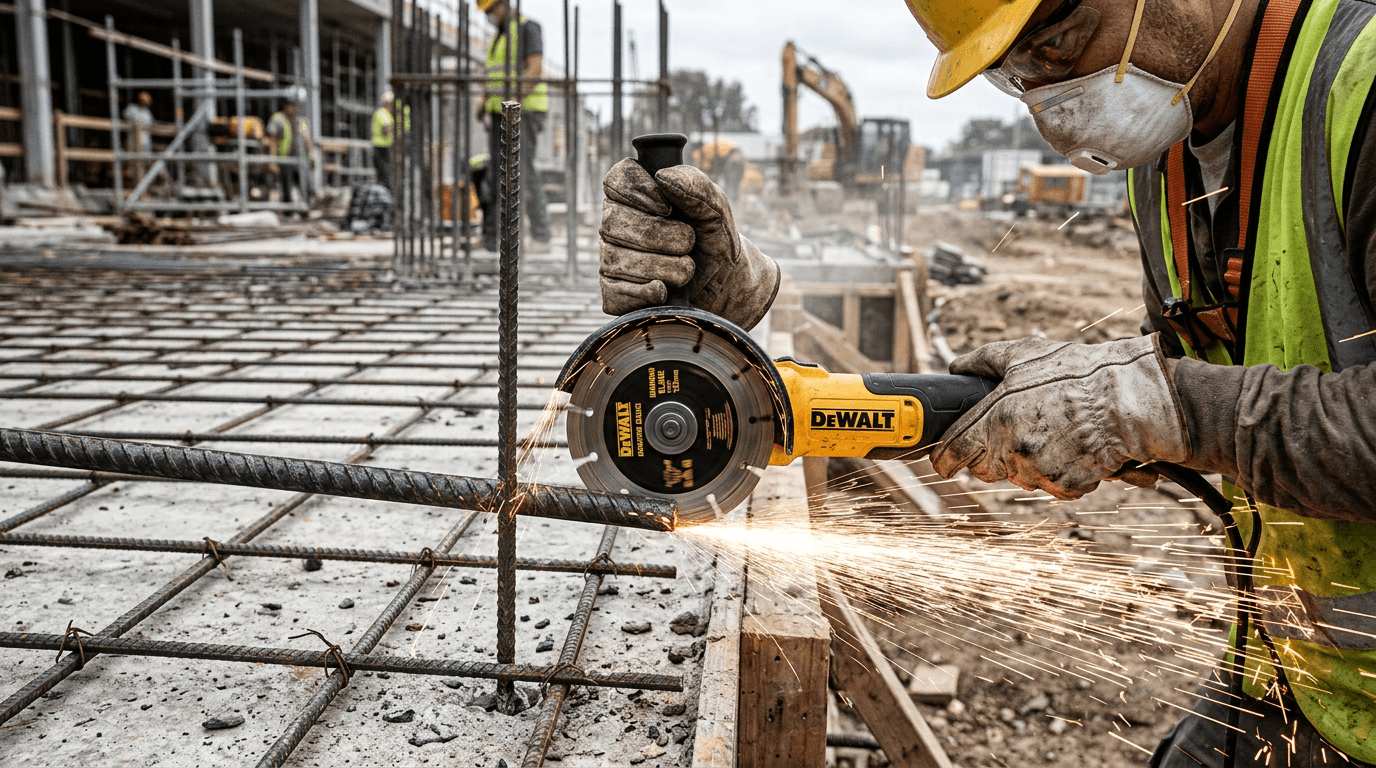
Can You Cut Metal With a Diamond Blade?
When diamond blades can and can't cut metal. Rebar, cast iron, and steel—what works and what to use instead.
Diamond blades are made to cut hard, abrasive materials like concrete, brick, and tile. Whether they can cut metal depends on the metal and the blade.
What diamond blades are made for
The diamond grit is bonded to cut minerals—concrete, masonry, stone, tile. These materials are abrasive and brittle; as you cut, they wear away the bond that holds the diamond, exposing fresh grit. That’s how the blade stays sharp. Metal is different: it’s ductile and can load or damage the blade if you use it for continuous metal cutting. The metal doesn’t wear the bond in the same way; instead it can smear onto the blade, trap heat, and cause the segments to wear unevenly or crack. So diamond blades are optimized for minerals, not for metal as the primary material.
Rebar and embedded metal
When you cut concrete that has rebar in it, a diamond blade rated for “concrete and rebar” or “heavy duty” can handle the rebar. The blade is still primarily cutting concrete; the rebar is incidental. So yes, you can cut through rebar when it’s in concrete with the right diamond blade. The segments on these blades are designed to absorb the impact of hitting metal and to clear the cut. Don’t use that same blade to cut rebar or other metal by itself for long runs—that will overheat the blade and wear it unevenly. If you need to cut rebar or metal as the main material, switch to an abrasive cut-off wheel or a metal-cutting blade.
Cutting metal only
For cutting steel, rebar, or other metals as the main material, use an abrasive cut-off wheel or a blade designed for metal. Diamond blades are not the right choice for dedicated metal cutting. They can overheat, load up, or wear unevenly. Abrasive wheels and metal-cutting blades are designed for the ductile nature of metal and will last longer and cut more predictably. We stock metal blades for reciprocating saws, circular saws, and angle grinders—use those when the primary material is metal. Reserve diamond blades for concrete, masonry, and tile, and for concrete that happens to contain rebar.
Why metal is different
Concrete, brick, and tile are abrasive and brittle. As you cut, they wear away the bond that holds the diamond grit, exposing fresh diamond. Metal is ductile and tends to smear or load the blade instead of wearing the bond evenly. That can cause overheating, uneven wear, and a shortened blade life. Some metals (e.g. rebar in concrete) are acceptable in small amounts because the blade is still mostly cutting concrete. Cutting metal as the primary material is where problems occur.
Cast iron and other metals
Cast iron is brittle and can be cut with some diamond blades, but it’s not the primary use. Specialty diamond blades exist for certain metals and alloys; if you need to cut metal with a diamond blade, use only a blade that is explicitly rated for that metal. For general-purpose steel, rebar, pipe, and sheet metal, use an abrasive cut-off wheel or a metal-cutting circular saw blade. We carry metal blades for those applications. The key is to never assume a blade can cut a material unless the packaging or manufacturer says so. When in doubt, use the blade type that’s designed for the primary material you’re cutting—and when that material is metal, reach for a metal blade, not a diamond masonry blade.
What happens if you use a diamond blade on steel?
If you run a standard masonry diamond blade on steel for an extended time, the blade can overheat, the bond can break down or load with metal, and the edge can wear unevenly or crack. At best you ruin the blade; at worst you risk injury from a damaged wheel. Use the right blade for the material. Short, accidental contact (e.g. hitting rebar once in a concrete cut) is what rebar-rated blades are for. Sustained cutting of metal is not. If you’re not sure whether your job is “concrete with some rebar” or “cutting metal,” ask: is the main material concrete or metal? If it’s metal, use a metal blade.
Buying tips
- For concrete that has rebar, choose a blade labeled “concrete and rebar” or “heavy duty” with rebar in the description.
- For cutting metal only (steel, rebar, pipe), buy an abrasive cut-off wheel or a metal-cutting blade, not a masonry diamond blade.
- If you do both concrete and metal cutting, keep separate blades and use each only for its intended material.
Common mistakes
- Using a concrete diamond blade to cut rebar or metal by itself – The blade is meant for concrete with incidental rebar. Dedicated metal cutting will damage it.
- Assuming all diamond blades cut metal – They don’t. Diamond blades are for minerals; metal cutting requires the right abrasive or metal-rated blade.
- Switching materials without changing blades – Once you’ve used a blade on metal extensively, don’t switch back to concrete with the same blade; it may be damaged or loaded.
Quick reference
- Concrete with rebar: use a diamond blade rated for “concrete and rebar.” You can cut through the rebar as part of the concrete cut.
- Rebar or metal only: use an abrasive cut-off wheel or metal-cutting blade, not a masonry diamond blade.
- Steel, pipe, sheet metal: use metal-cutting blades or wheels. We carry metal blades for this.
- Tile, concrete, masonry: use diamond blades or concrete and asphalt blades. Keep those blades for non-metal materials only.
Final takeaway
Diamond blades are excellent for concrete, masonry, and tile. They can also cut through rebar when it’s embedded in concrete—that’s what “concrete and rebar” blades are for. But the moment the primary job becomes cutting metal (rebar, pipe, steel, sheet metal), switch to an abrasive or metal-cutting blade. Keeping a separate blade for metal and using your diamond blades only for minerals will save you money, improve cut quality, and reduce the risk of a damaged or failed blade. If you’re cutting a slab that has rebar in it, your concrete-and-rebar diamond blade is the right choice. If you’re cutting rebar or steel to length for a project, put that blade away and use a metal-cutting blade or wheel instead. The distinction keeps your tools in good shape and your cuts consistent. Many contractors keep both a diamond blade for concrete and a metal-cutting blade for rebar and steel on hand, and they switch as soon as the job changes from “cutting concrete” to “cutting metal.” That habit extends blade life and avoids the cost and danger of a failed blade. In short: diamond for concrete and masonry (including concrete with rebar); metal blades or abrasive wheels for metal. Stick to that rule and you’ll get the best performance from your blades and the safest results on the job. We carry both diamond blades for concrete and masonry and metal blades for steel and rebar—choose the right category for the material you’re cutting and you’re set. When the material is concrete (even with rebar), use a diamond blade; when the material is metal, use a metal blade—it’s that simple. Following this rule will keep your blades in good shape and your cuts safe and consistent.
Summary
Use a diamond blade for concrete, masonry, and tile—and for concrete that contains rebar. For cutting metal only, use the appropriate metal-cutting blade or wheel. If you’re unsure, check the blade’s packaging or the manufacturer’s guidelines. Matching the blade to the material protects the blade, improves results, and keeps you safe. We stock diamond blades for concrete and masonry and metal blades for steel, rebar, and other metals—use each type only for its intended purpose and you’ll get the best performance and longevity from your blades.
Where to shop
We carry diamond blades for concrete and rebar, plus metal-cutting blades. Shop our concrete blades or metal blades categories to find the right tool for the job.
Next step
Shop the category that matches your job, or keep reading in the guides hub.
FAQ
- Will a diamond blade cut steel?
- Standard diamond blades are designed for concrete, masonry, and tile. They are not ideal for cutting most steel. For steel and ferrous metals, use an abrasive cut-off wheel or a blade specifically rated for metal cutting.
- Can you use a diamond blade for rebar?
- Yes. Segmented diamond blades rated for concrete and rebar can cut through rebar embedded in concrete. They are designed to handle the occasional hit on metal during concrete cutting. Don’t use them for cutting rebar or metal alone for long periods.
- What blade do I use to cut metal?
- For steel, use an abrasive cut-off wheel or a metal-cutting circular saw blade. For rebar in concrete, a diamond blade rated for rebar is appropriate. For non-ferrous metals, follow the blade manufacturer’s recommendations.