
Best Diamond Blade for Angle Grinder - Concrete, Tile & Metal
How to choose a diamond blade for your angle grinder. Concrete, tile, and metal cutting options and safety tips.
An angle grinder with a diamond blade can cut concrete, masonry, tile, and some metals. Picking the right blade and using it safely improves results and blade life.
Why use a diamond blade on an angle grinder?
Angle grinders are portable and can reach tight spots that a circular saw or wet saw can’t. A diamond blade gives you cleaner cuts and longer life than an abrasive disc on concrete, brick, block, and tile. For shallow cuts, scoring, trimming, notches, and curves, a diamond blade on a 4-1/2" or 5" grinder is a common choice. Abrasive discs wear out quickly on masonry and create a lot of dust; a diamond blade cuts faster and lasts longer once you have the right type for the material. Many tile installers and masons keep both a masonry diamond blade and a tile blade for their grinder so they can switch as the job changes.
Blade types
- Concrete/masonry – Segmented or turbo blades for concrete, block, brick. Choose dry or wet rating to match your use. Segmented blades are the standard for dry cutting and for concrete with rebar; turbo blades can give a slightly smoother cut and are often used with water.
- Tile/stone – Continuous or turbo rim to reduce chipping on ceramic, porcelain, and stone. Continuous rim is the gentlest on tile; use it when edge quality matters. Turbo can cut a bit faster and is also suitable for many tile and stone jobs.
- Metal – Only use blades explicitly rated for metal. Standard diamond blades are for masonry and tile, not general steel cutting. Using a masonry blade on steel can damage the blade and create a hazard.
Sizing
Match the blade diameter to your grinder (e.g. 4-1/2", 5", 6"). Check arbor size (e.g. 7/8" or 22.2mm) and max RPM. Never use a blade larger than the grinder guard allows. Most 4-1/2" angle grinders use a 7/8" (22.2 mm) arbor; some use 5/8". The blade packaging will list the arbor size and maximum RPM—your grinder’s RPM should be at or below that number. Using a blade rated for a lower RPM than your grinder produces can be dangerous.
Safety
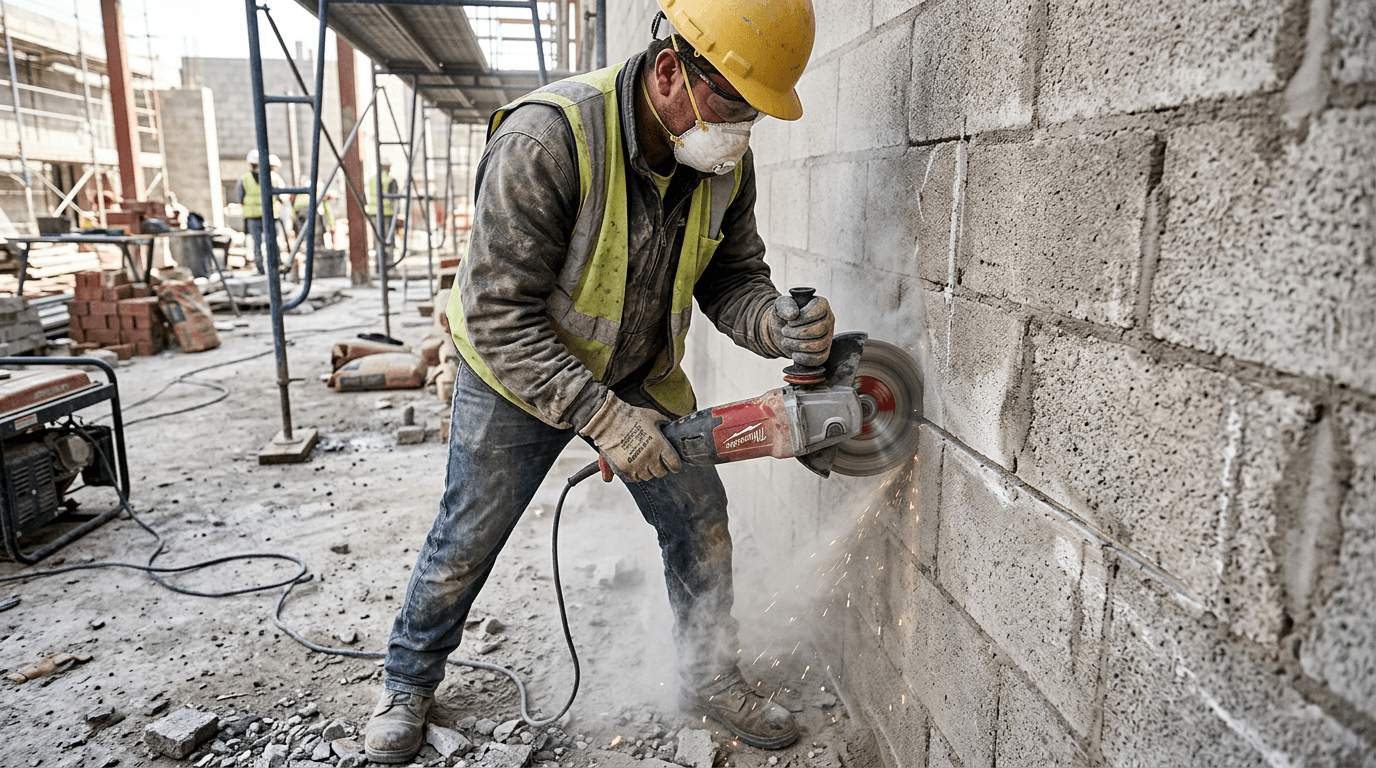
Wear safety glasses, a face shield, respirator, and gloves. Secure the workpiece and keep the cord and your body clear of the wheel. Let the grinder come up to speed before cutting and avoid forcing the blade. Guard the blade with the correct guard and use both hands. Angle grinders can kick back if the blade binds—keep a firm grip and don’t stand directly in line with the wheel. For concrete and masonry, silica dust is a hazard; a respirator is essential. Never remove the guard to fit a larger blade or to reach a tight spot; use a smaller tool or blade instead. Hearing protection is also recommended, as grinders are loud during extended use.
Dry vs wet
Most angle grinder work is dry. Use a blade rated for dry cutting and control dust with a respirator and, if possible, a vacuum or dust shroud. Wet cutting with an angle grinder is possible with specialty attachments (e.g. a water feed or a wet-cutting guard), but it’s not standard. If you need wet cutting for dust control or blade life, consider a wet tile saw for tile or a circular saw with a wet setup for masonry.
When to use an angle grinder vs other tools
Angle grinders excel at shallow cuts, notches, trimming, and detail work where a circular saw or wet saw won’t fit. For full-depth cuts through thick tile or long cuts in concrete, a circular saw with a diamond blade or a wet saw is often the better choice. Use the angle grinder when the job is small, tight, or requires curves and notches. For example, cutting a square in a tile for an outlet is a classic angle grinder job; cutting 20 linear feet of 2" deep concrete is better done with a circular or cut-off saw. The grinder is a complement to those tools, not a replacement for heavy cutting.
Buying tips
- Match diameter to your grinder: 4-1/2" for most grinders, 5" or 6" if your tool and guard allow.
- Arbor size is usually 7/8" (22.2 mm) for angle grinders; confirm before buying.
- Choose the rim type for the material: segmented for concrete and masonry, continuous or turbo for tile and stone.
- Don’t use a masonry diamond blade on metal, or a tile blade on concrete—each type is optimized for its material.
Common mistakes
- Using the wrong blade for the material – Concrete blades chip tile; tile blades wear fast on concrete. Match the blade to the job.
- Removing the guard – Never run an angle grinder without the guard. It protects you from kickback and debris.
- Forcing the cut – Let the diamond blade grind. Forcing causes heat, wear, and risk of binding.
- Skipping PPE – Eyes, face, lungs, and hands need protection. Concrete and tile dust are harmful.
Project ideas
Use an angle grinder with a diamond blade for trimming tile around outlets, cutting notches in brick or block, scoring concrete before breaking, grinding down high spots in masonry, or cutting curves in tile. For straight, full-depth cuts in tile, a wet saw is better; for long concrete cuts, a circular or cut-off saw is more efficient. Contractors often use the angle grinder for the first cut or score line in concrete before using a chisel or hammer to break out a section. For remodeling work, a 4-1/2" grinder with a masonry diamond blade is handy for cutting block or brick to fit around pipes or ducts. Keep a tile blade on hand if you do both masonry and tile so you can switch without using the wrong blade on the wrong material.
Summary
An angle grinder with a diamond blade is a versatile setup for concrete, masonry, and tile when you need portability and access to tight spaces. Choose the blade type (segmented, turbo, or continuous rim) for your material, match size and arbor to your grinder, and always use the guard and full PPE. Use it for shallow and detail work; for heavy or long cuts, switch to a larger saw. Keeping both a masonry and a tile blade for your grinder lets you tackle a wide range of jobs without using the wrong blade on the wrong material. Shop our diamond blades to find the right option for your grinder and your next job. Whether you’re cutting concrete block, trimming tile, or scoring masonry, match the blade to the material and keep the guard and PPE in place for safe, consistent results. Angle grinders are one of the most versatile tools on a job site, and pairing them with the right diamond blade for each material makes them even more useful. Avoid using a concrete blade on tile or a tile blade on concrete—each type is optimized for its own application and will perform poorly or wear quickly on the wrong material. With the right blade and safe habits, an angle grinder remains one of the most useful tools for masonry and tile work on the job site. Check our diamond blades for segmented blades for concrete and masonry and continuous-rim or turbo blades for tile and stone, and match the size and arbor to your grinder for the best fit and performance. Never use a blade larger than your grinder’s guard allows, and always use the guard and full PPE when cutting concrete, masonry, or tile. With the correct blade for the material, your angle grinder will deliver clean cuts and long blade life.
Where to shop
We carry diamond blades for angle grinders in multiple sizes and for concrete, tile, and masonry. Shop our diamond blades category to find the right blade for your grinder and material.
Next step
Shop the category that matches your job, or keep reading in the guides hub.
FAQ
- Can you cut metal with a diamond blade?
- Diamond blades can cut certain metals (e.g. rebar, cast iron) but are not designed for all metals. For steel and ferrous metals, an abrasive cut-off wheel or a blade rated for metal is usually better. Use a diamond blade only for materials it’s rated for.
- What size diamond blade for 4.5 inch angle grinder?
- Use a 4-1/2" (115mm) diamond blade with the correct arbor size (typically 7/8" or 22.2mm for angle grinders). Match the blade’s max RPM to your grinder’s RPM.
- Wet or dry for angle grinder diamond blade?
- Most angle grinder use is dry. Use a blade rated for dry cutting and wear a respirator and eye protection. Wet cutting with an angle grinder is possible with special setups but is not standard.