
Concrete Saw Blades for Circular Saw - Buyer's Guide
How to choose and use a diamond blade for cutting concrete with a circular saw (skill saw). Sizes, types, and safety.
You can cut concrete with a circular saw (skill saw) by using a diamond blade designed for that purpose. Here’s how to choose the right blade and use it safely.
Can you cut concrete with a circular saw?
Yes. A circular saw with a diamond blade can cut concrete, block, brick, and pavers. The limits are depth of cut (usually 2–3 inches for a 7" blade) and dust. For deeper cuts or long runs, a dedicated concrete saw or walk-behind saw is more efficient, but for curb cuts, small openings, control joints, and touch-ups, a skill saw and diamond blade work well. Many contractors keep a 7" diamond blade in the truck for quick cuts without unloading a larger saw. The key is matching the blade to the saw (diameter, arbor, RPM) and using proper safety gear for dust and kickback.
Types of diamond blades for circular saws
- Segmented – Rim is divided into segments. Best for dry cutting and concrete with rebar. Good cooling and chip clearance. The segments allow air to flow and debris to escape, which keeps the blade from overheating when cutting dry. This is the most common type for concrete work with a skill saw.
- Turbo – Serrated rim. Smoother cut, often used with water. Good for block, brick, and hard masonry. Turbos can be used dry or wet depending on the rating; they tend to produce a cleaner cut line than segmented blades.
- Continuous rim – Smooth edge. Used where chipping must be minimized (e.g. some tile or block). Often used with water. Not for heavy concrete—use segmented or turbo for that.
For most concrete work with a circular saw, a segmented or turbo blade rated for concrete is the standard choice. If you expect to hit rebar, choose a blade that is explicitly rated for concrete and rebar.
Choosing the right blade
Match the blade diameter and arbor to your saw. Common sizes are 7-1/4" for standard circular saws; some saws accept 6-1/2" or 7" blades—check the manual. Check the saw’s RPM and ensure the blade is rated for that speed (the blade’s max RPM should be at or above the saw’s no-load RPM). For concrete with rebar, choose a blade rated for rebar or “heavy duty.” Depth of cut is limited by the blade radius; a 7" blade typically cuts about 2-1/2" deep. If you need a deeper cut, you can make multiple passes, but for regular deep work a larger saw and blade may be more efficient.
How to cut concrete with a circular saw
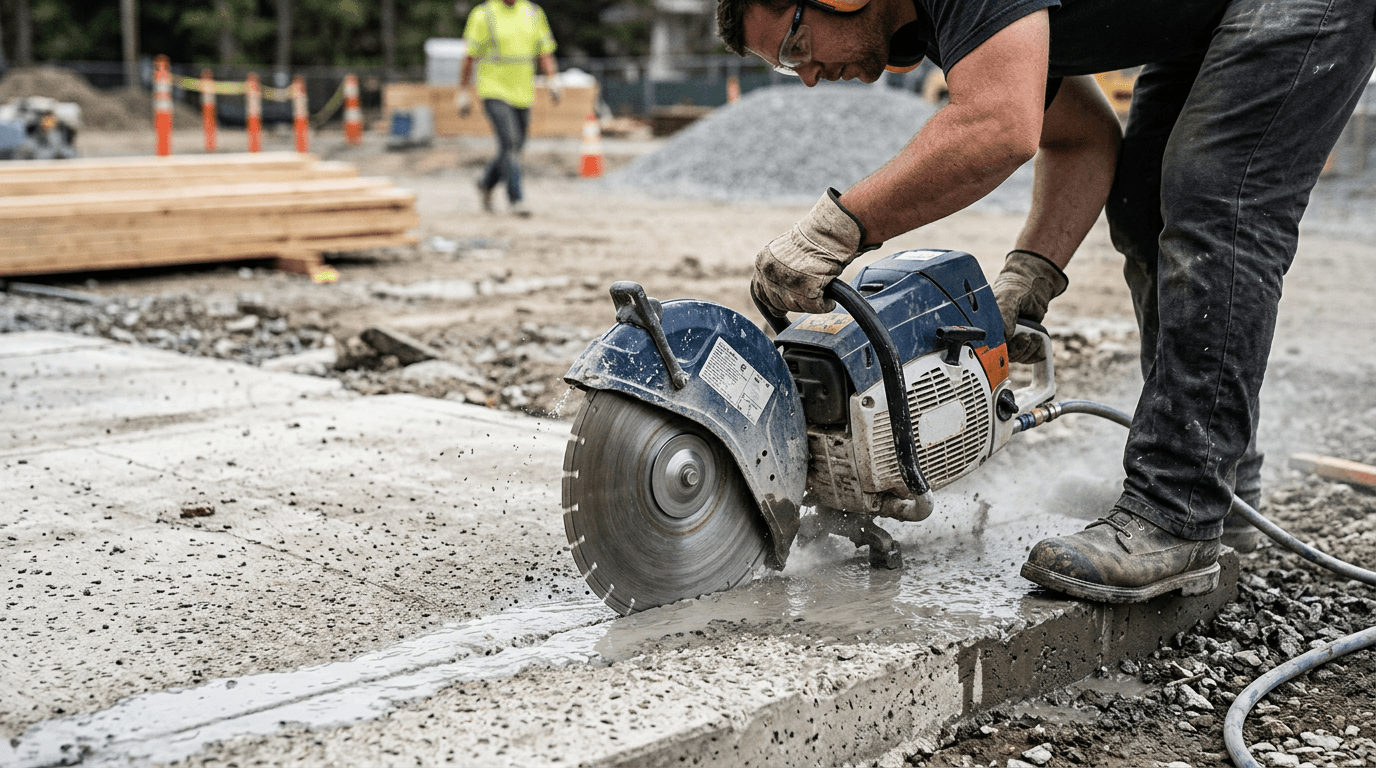
Wear eye protection, a respirator, and hearing protection. Mark the cut line and set the blade depth slightly deeper than the material thickness. Start the saw and let it reach full speed before touching the concrete. Ease the blade into the cut; don’t force it. For long cuts, use a guide or straight edge—a piece of angle iron or a board clamped in place works. Consider dust extraction or wet cutting if available to reduce silica dust. Make multiple passes if you need more depth than the blade can cut in one pass; trying to force a deep cut in one go can bind the blade and strain the saw. Keep the cord and your body out of the path of the cut and be prepared for kickback if the blade binds.
Blade care
Let the blade cool between heavy use. Don’t side-load or twist the blade. Store blades in a dry place and replace them when cutting slows noticeably or the segments show excessive wear. If you hit rebar or metal, don’t force—ease off and let the blade work through. A blade rated for rebar will handle occasional metal; a blade not rated for it can be damaged. After each job, brush off concrete dust and store the blade where it won’t get knocked or bent. A blade that’s been overheated or forced may have reduced life or uneven wear, so replace it if you notice a drop in cutting speed or visible damage to the segments.
When to use a circular saw vs a dedicated concrete saw
A circular saw with a diamond blade is ideal for curb cuts, small openings, control joint touch-ups, and jobs where you need a portable tool. For long linear cuts, deep cuts (beyond 2–3 inches), or high-volume concrete cutting, a dedicated concrete saw (cut-off saw) or walk-behind saw is faster and often safer. The circular saw is the right choice when the job is small enough that setting up a larger saw isn’t worth it.
Dust and silica safety
Concrete and masonry contain silica. Cutting dry creates respirable silica dust, which is harmful. Wear a respirator rated for silica (e.g. N95 or P100 with proper fit), and use eye and hearing protection. Where possible, use a saw with a dust port and connect a vacuum, or use a blade and setup designed for wet cutting to suppress dust. Follow OSHA or local guidelines for silica exposure.
Buying tips
- Confirm arbor size: most circular saws use 5/8" or 20 mm. A mismatched arbor is unsafe.
- For concrete with rebar, choose a blade explicitly rated for “concrete and rebar” or “heavy duty.”
- Dry-cutting blades are common for skill saws; if you plan to use water, get a blade rated for wet use.
- Depth of cut is roughly half the blade diameter—a 7" blade cuts about 2-1/2" deep. Plan your project accordingly.
Common mistakes
- Forcing the cut – Let the blade grind; forcing causes overheating and shortens blade life.
- Skipping respirator and eye protection – Silica dust is dangerous. Always use PPE.
- Using a blade that’s too large – Use only the diameter your saw is designed for. Check the manual.
- Cutting without a guide on long runs – Use a straight edge or guide to keep the cut straight and avoid binding.
Project ideas
Use a circular saw and diamond blade for cutting control joints in a slab, making an opening in a concrete wall or curb, trimming block or brick, or cutting pavers. For a single cut or a small area, it’s often the fastest setup. For a full driveway saw cut or many linear feet, consider a walk-behind or cut-off saw instead. Homeowners replacing a section of sidewalk or cutting a small opening in a foundation can often do the job with a circular saw and a 7" diamond blade; contractors doing daily concrete work may prefer a dedicated cut-off saw for power and depth. Either way, use a blade rated for the material and always wear a respirator and eye protection.
Summary
A 7" or 7-1/4" diamond blade on a circular saw lets you cut concrete, block, and brick with a tool you may already own. Use a segmented or turbo blade rated for concrete (and rebar if needed), match the arbor and RPM, and always use a respirator and eye protection. Cut in layers for depth, use a guide for long cuts, and replace the blade when it wears. For bigger jobs, step up to a dedicated concrete saw. Whether you’re a homeowner doing a single project or a contractor doing touch-ups between larger saw work, the right blade and safety habits make circular-saw concrete cutting effective and safe. Stock a 7" or 7-1/4" diamond blade rated for concrete (and rebar if you expect to hit metal), and pair it with a respirator and eye protection every time. For occasional concrete cuts, a circular saw and diamond blade are often all you need. Depth is limited to about half the blade diameter, so for 2–3 inch cuts a 7" blade is sufficient; for deeper work you can step down in multiple passes or use a larger saw. Always mark your cut line clearly and use a guide for long, straight cuts to avoid binding and to keep the cut accurate.
Where to buy
We carry diamond blades for circular saws in several diameters and types. Shop our concrete and asphalt blades or diamond blades category to find the right blade for your saw and job.
Next step
Shop the category that matches your job, or keep reading in the guides hub.
FAQ
- What depth can a 7" blade cut?
- A 7" diamond blade typically cuts about 2-1/2 inches deep at 90 degrees. Depth depends on the blade's actual cutting diameter and the saw's guard setup.
- Wet or dry cutting concrete with a circular saw?
- Dry cutting is common with circular saws; use a blade rated for dry use and wear a respirator and eye protection. Wet cutting reduces dust and extends blade life but requires a saw and setup designed for water.
- Best blade for concrete with rebar?
- Use a segmented diamond blade rated for concrete and rebar. Segments help with cooling and debris removal when hitting metal. Avoid forcing the cut; let the blade work through.